
Welcome to RECEIC

2nd edition RECEIC Awards on Resource Efficiency and Circular Economy

RECEIC Awards visual
2nd Edition · 2026

RECEIC Awards on Resource Efficiency & Circular Economy

The RECEIC Awards are global honours curated to recognize companies and innovators driving sustainable transformation through circular business models, resource-efficient technologies and collaborative solutions.
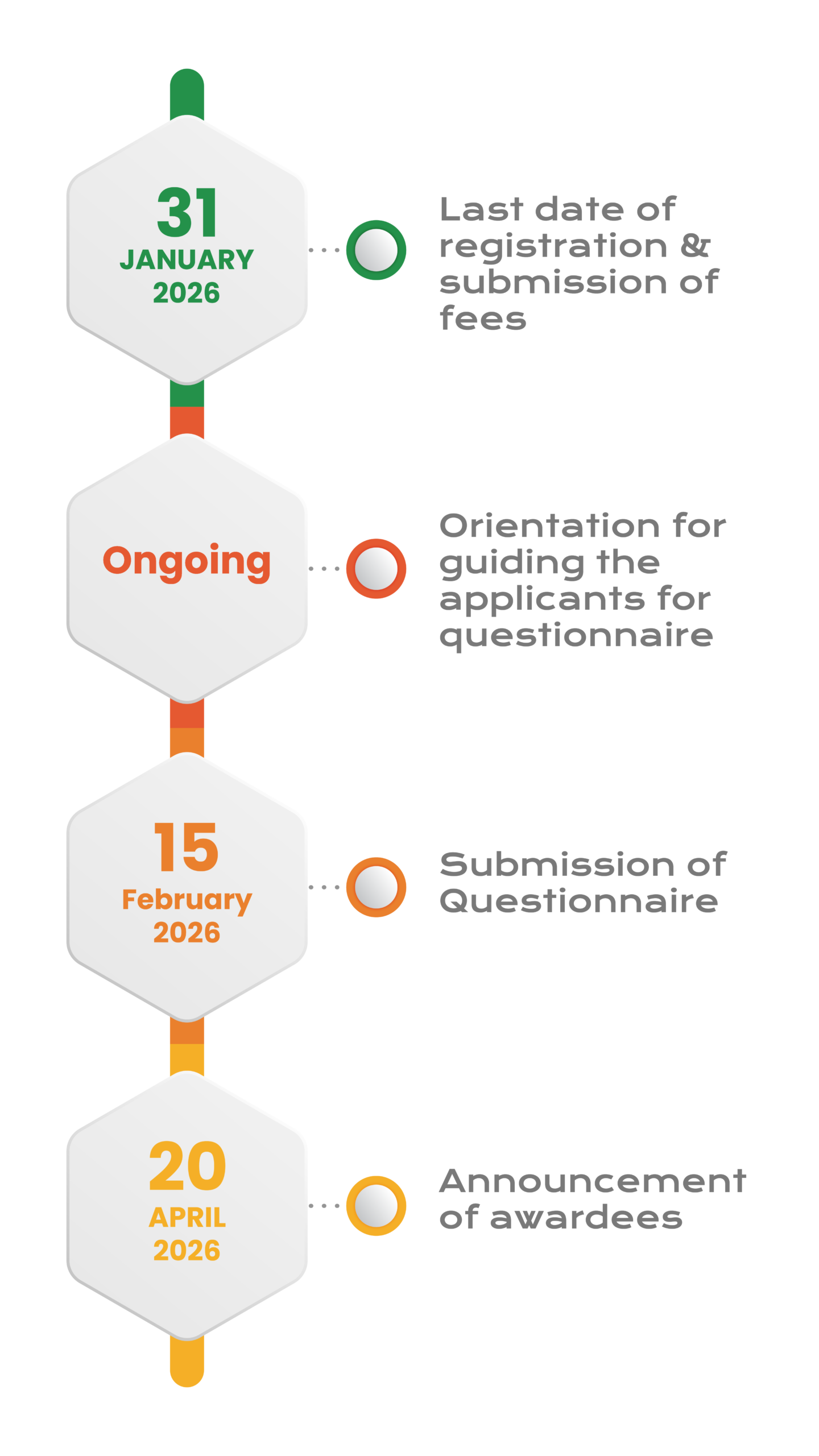
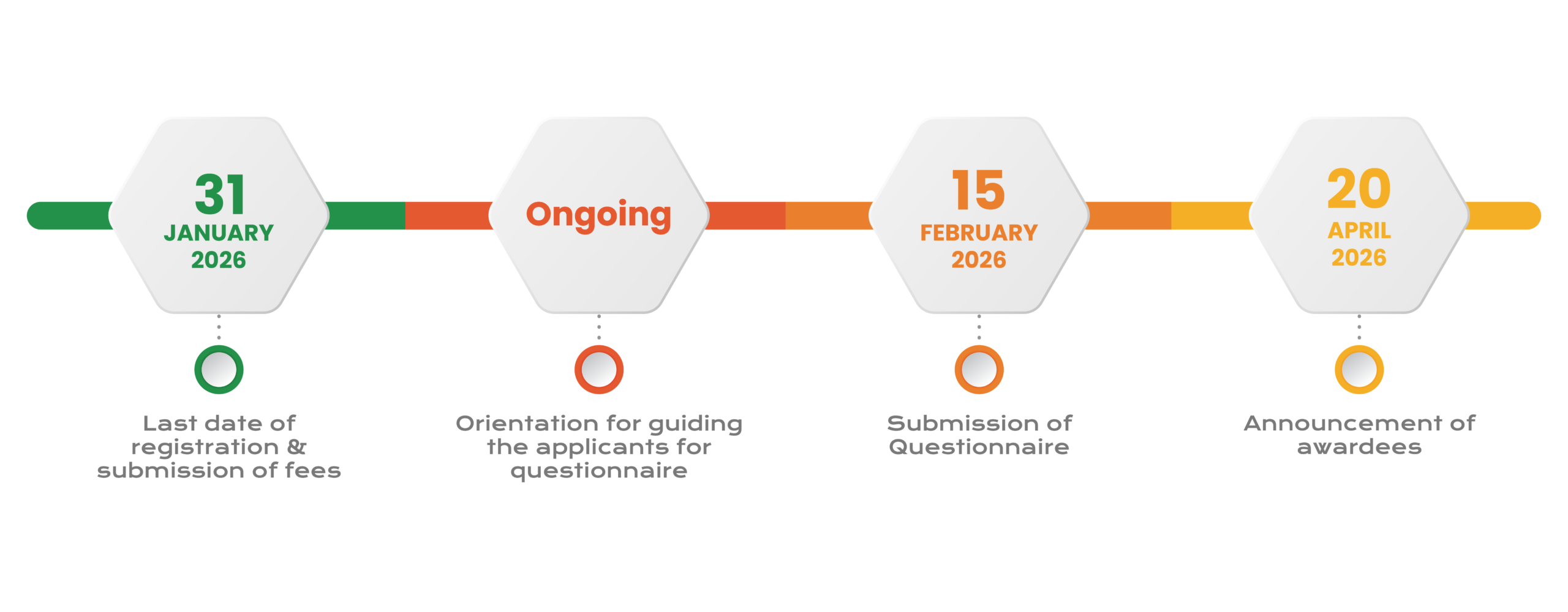
Important Dates
Awards Announcement
April 20-21, 2026
Last Date to Apply
31 January 2026

Meet Our Jury

Recognizing Excellence in Sustainability
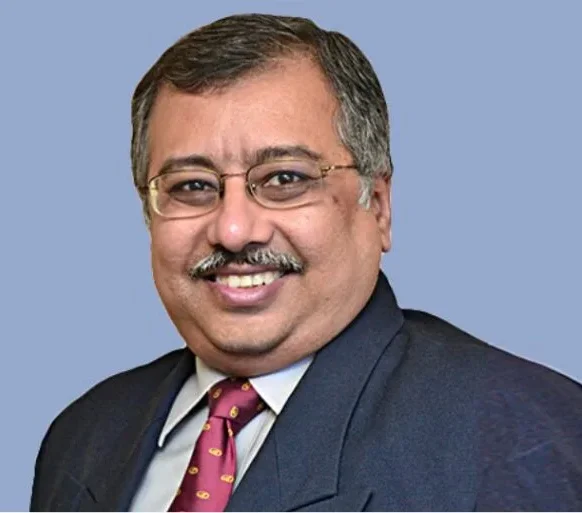
Dr. Mukund Rajan

Dr. Mukund Rajan

Chairperson

ECube Investment Advisors Private Limited

Ms. Mridula Ramesh

Ms. Mridula Ramesh

Climatetech Investor; Founder

Sundaram Climate Institute

Mr. Anirban Ghosh

Mr. Anirban Ghosh

Head – Centre for Sustainability

Mahindra University

Assessment Process

Preliminary Screening

Stage 1: Preliminary Screening

Documentation review by RECEIC Secretariat.

Interim Jury

Stage 2: Interim Jury

Each entry reviewed by two independent assessors.

Grand Jury

Stage 3: Grand Jury

Final presentations to identify the winner & runner-up.
Important Dates

RECEIC Desktop Banner RECEIC Mobile Banner

Past RECEIC Award winners

Awardees Case Studies

Category 01
Circular Economy Models & Resource Efficiency Innovations
Matured
Winner
Re Sustainability Limited

Built a large-scale circular economy model transforming diverse waste streams into reusable resources, fuels, and high-value materials. Created an integrated ecosystem for collection, processing, and reintegration of secondary resources.
Re Sustainability Limited has built a large-scale circular economy model that transforms diverse waste streams into reusable resources, fuels, and high-value materials. It has created an integrated ecosystem for collection, processing, and reintegration of secondary resources into productive value chains. The company continued to scale infrastructure to maximize value recovery from different waste streams including – hazardous and municipal waste, electronic waste, plastics, construction waste, and end-of-life vehicles, while driving circular adoption through collaborations across industries and policymakers. It has redefined waste management into a resource recovery ecosystem through innovation, strong governance, and sustained investments.
1st Runner-up
JSW Cement Ltd.

Circular business model transforms industrial by-products like slag and fly ash into low-carbon construction materials. Nearly 80% of its portfolio comprises green products, achieving a low emission intensity of 258 kg CO₂/tonne.
JSW Cement's circular business model transforms industrial by-products like slag and fly ash into low-carbon construction materials, significantly reducing clinker use and conserving natural resources. Nearly 80% of its portfolio comprises green products, achieving a low emission intensity of 258 kg CO₂/tonne and avoiding over 2.19 lakh tonnes of CO₂. The company advances circularity through large-scale waste co-processing, water conservation, and renewable energy adoption. Backed by strong R&D, digital innovation, and patents, the initiative delivers measurable environmental impact, cost savings, and long-term stakeholder value while accelerating progress toward net-zero goals.
2nd Runner-up
Sulochana Cotton Spinning Mills Pvt Ltd

Radical "Zero Waste" philosophy diverting 7 million PET bottles daily to produce 135 tons of dope-dyed recycled polyester fiber. Dyeing textiles without using a single drop of water through dope dyeing technology.
Sulochana Cotton Spinning Mills' recognition is a testament to its radical "Zero Waste" philosophy, which transforms industrial byproduct into high-value resources. This award-winning innovation is anchored by a massive recycling capacity, diverting 7 million PET bottles daily, to produce 135 tons of dope-dyed recycled polyester fiber. By utilizing dope dyeing—a remarkable feat of dyeing textiles without using a single drop of water. The mill responsibly upcycles PP bottle caps into pellets while PVC labels are diverted to the cement industry for energy recovery, ensuring a Zero to Landfill status. The facility converts sewage waste into biogas, fully utilized for canteen operations, achieving zero dependence on LPG. The mill is targeting net-zero emissions by 2027.
Evolving
Winner
Greenscape-eco Management Pvt. Ltd.

One of the only companies to have successfully closed the loop for a device-to-device recycling model. Unlocks hidden resources from electronic devices, separating and refining each component with precision for reintegration.
At Greenscape, every discarded electronic device is seen as the beginning of a new cycle. Every device is a collection of valuable resources—various metals, polymers and other commodities—carefully assembled to serve a purpose. Greenscape unlocks these hidden resources, separating and refining each component with precision. What was once a single, non-functional product transforms into a stream of reusable commodities. These materials are then reintroduced into the manufacturing ecosystem, enabling the creation of new devices—identical in function, yet far more sustainable in origin. This is not just recycling; it is regeneration. Greenscape is one of the only companies that have successfully closed the loop for a device-to-device recycling model, ensuring a sustainable future for all coming generations.
Emerging
Winner
Elifecycle Management Private Limited

Driving circular economy innovation enabling large-scale exchange programs for leading brands. Extends product lifecycles through refurbishment of IT devices and appliances. Already reduced EPR costs for partners by ~20%.
Elima is driving circular economy innovation by enabling large-scale exchange programs for leading brands, offering attractive exchange value to consumers to divert material from the informal sector. The value chain is enhanced by extending product lifecycles through refurbishment and re-engineering of IT devices and appliances into like-new products, while upcycling aluminium and plastics into high-quality raw materials for OEM supply chains. The model has already reduced EPR costs for partners by ~20%, with a pathway to net-zero compliance costs and value creation. Additionally, Elima has successfully piloted the conversion of Polyurethane (PU) foam into polyol, unlocking value from a traditionally non-recyclable material.
Winner
Minimac Systems Pvt Ltd

Pioneering India's first three-tier circular lubricant ecosystem through Nano Circularity™, Micro Circularity™, and Macro Circularity™ programs. Purified over 6 million litres of oil, abated 73.35 Gg CO₂e.
Minimac Systems is pioneering India's first three-tier circular lubricant ecosystem through its Nano Circularity™, Micro Circularity™, and Macro Circularity™ programs—designed to extend lubricant life, recondition used oils, and enable high-quality re-refining at an industrial scale. Its flagship Recycling on Wheels (RoW) model brings zero-CAPEX, mobile oil purification directly to plant sites, making circularity accessible and scalable for both MSMEs and large enterprises. To date, Minimac has purified over 6 million litres of oil, abated 73.35 Gg CO₂e, and unlocked more than ₹550 Crores in cumulative savings for the Indian industry. Bold mission: to abate 860 Gg CO₂e by 2034.
Category 02
Technology Disruptors
Winner
Indian Oil Corporation Ltd

INDEcoP2F technology converts waste plastics into valuable products using the existing Delayed Coker Unit of a petroleum refinery. Achieves plastic to fuel conversion of >95%, especially for multilayered packaging (MLP) waste.
INDEcoP2F (Indian Oil's Eco-friendly Plastic to Fuel) technology is an advanced process developed by Indian Oil Corporation Limited for converting waste plastics into valuable products. It uses the existing Delayed Coker Unit of a petroleum refinery for valorization of waste plastics especially multilayered packaging (MLP waste) wherein plastic to fuel conversion of >95% is achieved while overcoming the processing challenges posed by conventional methods. Key benefits include reduction of plastic waste, lower greenhouse gas emissions, and contribution to a circular economy by converting waste into reusable energy resources. This technology also helps reduce dependence on crude oil imports while addressing environmental challenges.
Winner
Tamil Nadu Water Investment Company Limited

Pioneered the world's first large-scale ZLD implementation for Tirupur's textile cluster. 299 billion litres of water recycled and 18,18,960 tons of salt recovered over 18 years, delivering ₹4939 Cr in cost savings.
TWIC pioneered the world's first large-scale ZLD implementation for Tirupur's textile cluster, establishing 9 CETPs connecting 252 dyeing units (51 MLD capacity) with 95% water recovery. Through ZLD 2.0, TWIC achieved significant resource recovery — 299 billion litres of water recycled and 18,18,960 tons of salt recovered over 18 years — delivering ₹4939 Cr in cost savings and restoring the polluted Noyyal River. Extended expertise to the municipal sector by developing Tamil Nadu's Water Reuse Policy and a comprehensive Treated Wastewater Reuse Grid with 27 schemes, TTRO projects, and river restoration (Adyar, Cooum, Buckingham Canal). TWIC's innovations have set national benchmarks, influenced regulatory guidelines, and are being replicated across India.
Runner-up
Proman Infrastructure Services Private Limited

Super Plasma DC Arc Furnace — a disruptive innovation enabling ultra-high-temperature processing. Transforms low-grade minerals, metallic ores, and hazardous waste into valuable metals and clean by-products, driving a circular economy.
Super Plasma DC Arc Furnace — a disruptive innovation technology, enables ultra-high-temperature processing with unmatched control and efficiency. Transforms low-grade, minerals metallic ores and other materials and hazardous waste into valuable metals clean by-products, thereby driving a circular economy, combining sustainability with advanced metallurgy. It redefines how industries recover, refine, and re-use resources. This technology sets a new benchmark for cleaner, smarter, and future-ready manufacturing.
Academia
Winner
NICMAR University

Implemented green campus features including 97 KWh Solar PV catering to 41% of annual infrastructure load, 36.40% water savings over baseline, and 40%+ LPD reduction through LED lighting. Aims to achieve net-zero in the near future.
At NICMAR University, Pune (NUP), sustainability matters. NUP has implemented green features within the campus including: use of renewable energy with the installation of Solar PV with a capacity of 97 KWh that caters to 41% of annual infrastructure load, installing water efficient plumbing fixtures that led to water savings of 36.40% over baseline and installing energy efficient lighting fixtures such as LED that led to more than 40% LPD reduction. NUP fosters knowledge circularity by conducting knowledge series on Environment, Health and Safety. NUP engages in project-based learning for students through student in-house research projects (e.g: Feasibility studies on implementation of biogas and vermicompost in campus). NUP proactively allocates annual budget for sustainable initiatives and aims to achieve net-zero in the near future.
Category 03
Collaboration and Partnership for Impact
Winner
Hindustan Petroleum Corporation Limited

Built a multi-stakeholder circularity ecosystem for used oil, integrating core sectors, OEMs, recyclers, digital partners and competitors. Through governance, SOPs and digital traceability, enabled compliant collection and certified recycling at national level.
HPCL has strived to build a multi-stakeholder circularity ecosystem for used oil, integrating the core sectors, OEMs, recyclers, digital partners and also included competitors in the collaborative activity. Through governance, SOPs and digital traceability, HPCL has enabled compliant collection, certified recycling and RRBO utilization at national level. The collaboration strengthens environmental stewardship, enhances EPR reliability and reduces leakage to the informal sector. The model demonstrates how structured partnerships can deliver measurable circular economy impact aligned with the Nation's sustainability goals.
Runner-up
Re Aarti Private Limited

ReAarti — a chemical recycling joint venture (51% Re Sustainability, 49% Aarti Circularity) uses large-capacity continuous pyrolysis to convert hard-to-recycle end-of-life plastics into high-value circular pyrolysis oil.
ReAarti is a chemical recycling joint venture between Re Sustainability and Recycling Private Limited (51%) and Aarti Circularity Limited (49%). It uses a large-capacity continuous pyrolysis process to convert hard-to-recycle end-of-life plastics into high-value circular pyrolysis oil. This oil serves as a sustainable feedstock for the petrochemical industry, helping businesses comply with Plastic Waste Management (PWM) rules and reduce reliance on fossil fuels.
Academia
Winner
Centre for Environment Education (CEE)

Systems-driven, inclusive circular economy model across 10 urban and 03 rural partnerships integrating local bodies, waste workers, recyclers, and entrepreneurs. Enabled recovery of 18,000+ metric tons of dry and plastic waste over 4+ years.
Centre for Environment Education (CEE) developed a systems-driven, inclusive circular economy sustainable model across 10 urban and 03 rural partnerships, integrating local bodies, waste workers, recyclers, and local entrepreneurs into decentralized waste management ecosystems. The initiative institutionalized systems through plastic waste characterization assessments, and development of SOPs for efficient operations. Real-time dashboards, QR-based tracking, and SMART monitoring frameworks improved traceability and decision making. Over 4+ years, the collaboration enabled recovery of 18,000+ metric tons of dry and plastic waste, 38,000 CO₂ checked, demonstrating scalable and self-sustaining solutions.
Category 04
Renewable Material Transition
Winner
Welspun Enterprises

In FY 2024–25, integrated 1.29 million MT of pond ash and 18,189 MT of fly ash, enabling 25% circular material inflow, 96% resource recovery, and avoidance of 31,065 MT of cement and ~50,000+ tCO₂e emissions.

In FY 2024–25, Welspun Enterprises Ltd. advanced renewable material transition through a project lifecycle approach, integrating 1.29 million MT of pond ash, 18,189 MT of fly ash, GGBS, and superplasticizers across design, procurement, and construction. This enabled 25% circular material inflow, 96% resource recovery, and avoidance of 31,065 MT of cement and ~50,000+ tCO₂e emissions, significantly reducing reliance on virgin materials and driving measurable decarbonization. In parallel, WEL's water infrastructure projects in Mumbai currently under construction are being designed to enable ~70% potable water supply coverage and ~40% wastewater treatment capacity, laying the foundation for future urban water circularity.